
Dirty windows can make even the most beautiful home look tired and neglected — and they block the natural light you actually paid for. The good news? You don’t need expensive products or harsh chemicals to fix that.
White vinegar for cleaning windows is one of those old-school tricks that actually holds up to modern scrutiny. It’s cheap, non-toxic, and when used correctly, it delivers a streak-free shine that rivals any commercial cleaner. In this guide, you’ll discover exactly how to make a powerful window washing solution at home, avoid the most common mistakes, and get professional-looking results with just a few pantry staples.
Why White Vinegar Works for Cleaning Windows
Before you grab that bottle, it helps to understand why this works — because it genuinely does, and not just by accident.
White vinegar is a mild acid (acetic acid), which makes it surprisingly effective at breaking down the stuff that makes windows look bad:
- Dissolves grease and grime that builds up from cooking steam, fingerprints, and pollution
- Removes hard water spots — those cloudy mineral deposits from rain or sprinklers
- Leaves glass streak-free when used with the right technique
- Non-toxic and safe around kids, pets, and plants
- Costs almost nothing — a bottle runs under a dollar and lasts for weeks
No fumes. No residue. No mystery ingredients. Just clean glass.
What You Need to Clean Windows with White Vinegar
Supplies List
You likely already have most of this at home:
- White distilled vinegar (the plain, cheap kind — not apple cider)
- Warm water
- A spray bottle
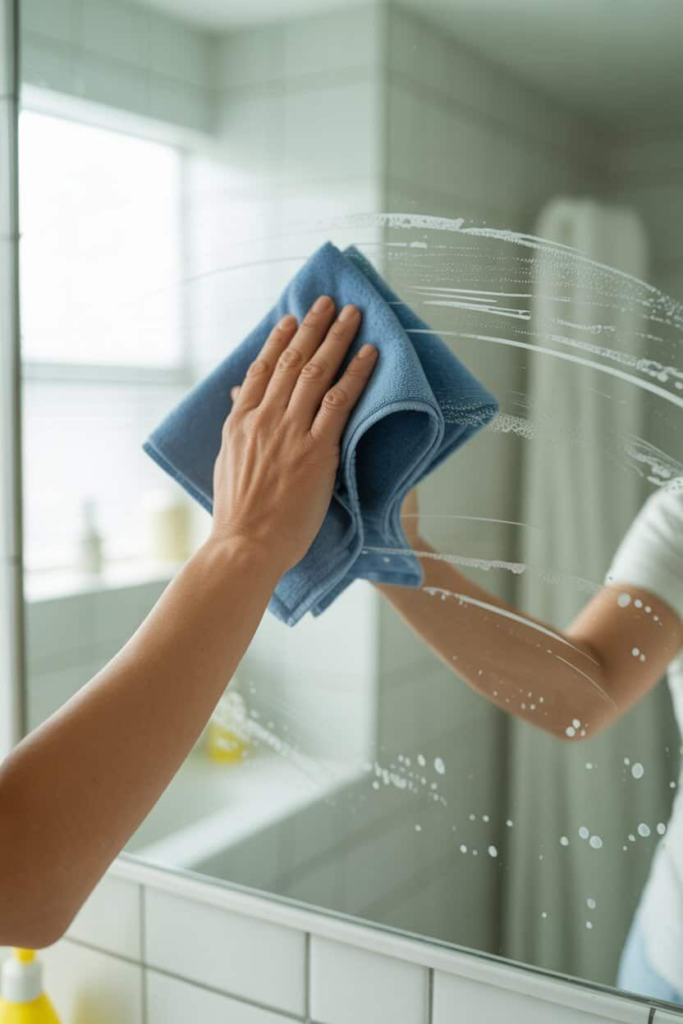
- Microfiber cloths (at least two)
- A squeegee (optional but highly recommended for larger windows)
- A dry towel for edges and frames
That’s it. No special trips to the store required.
The Best White Vinegar Window Cleaning Solution
Easy DIY Recipe
Here’s the simplest and most effective window cleaning with vinegar formula:
1 cup white vinegar + 1 cup warm water
Pour both into a spray bottle and give it a gentle shake. That’s your window washing solution — ready in under 30 seconds.
Want to level it up? Add a small drop of dish soap (seriously, just one drop) to help cut through grease on kitchen windows or heavily soiled glass. More than that and you’ll be fighting foam instead of dirt.
💡 Pro Tip: For very stubborn hard water stains, go full-strength vinegar with no dilution. Let it sit on the glass for 2–3 minutes before wiping.
Step-by-Step: How to Clean Windows with White Vinegar
Step 1: Remove Dust First
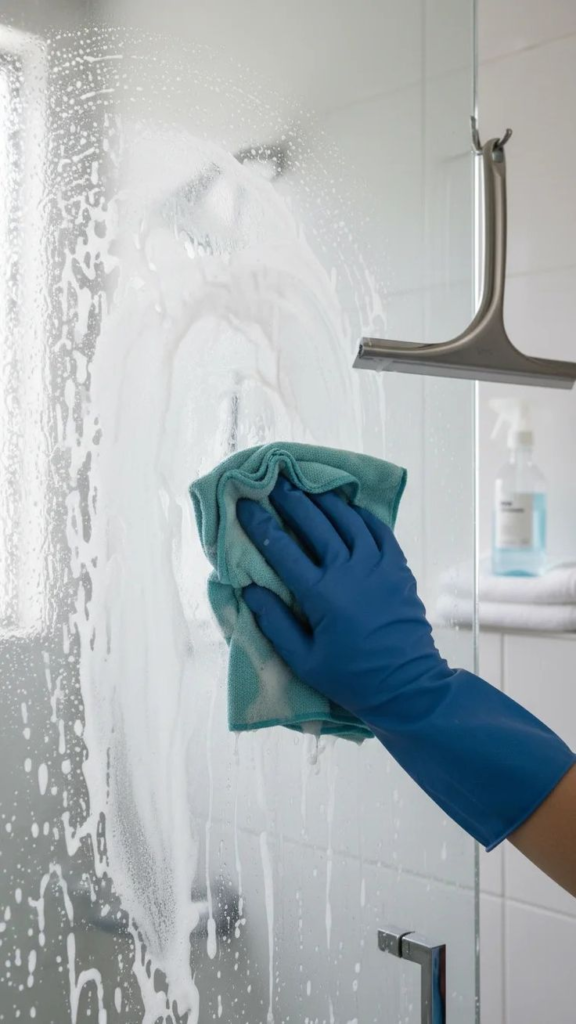
Don’t skip this. Spraying solution onto a dusty window just turns dust into muddy streaks. Use a dry microfiber cloth or a soft brush to wipe down the frame, corners, and glass surface first.
Step 2: Spray the Vinegar Solution
Apply the solution generously and evenly across the glass. Don’t be shy — you want good coverage, especially around edges where grime collects.
Step 3: Wipe with a Microfiber Cloth
Work in circular motions to lift dirt and stains, then finish with vertical strokes for a cleaner result. Microfiber is key here — it traps particles instead of just pushing them around like paper towels do.
Step 4: Dry for a Streak-Free Finish
This is where most people go wrong. Don’t let the solution air-dry — it leaves residue. Use a second dry microfiber cloth or a squeegee, working from top to bottom in overlapping strokes.
Wipe the squeegee blade after each pass with a dry cloth. Takes 10 extra seconds. Makes a huge difference.
Pro Tips for Sparkling Windows
These small details separate good results from great results:
- Clean on a cloudy day — direct sunlight dries the solution too fast, leaving streaks before you can wipe
- Work top to bottom — drips fall downward, and you’ll catch them as you go
- Switch to a fresh cloth when yours gets dirty — using a dirty cloth just redistributes grime
- Don’t forget the frames — a clean frame makes the whole window look sharper
- Do exterior windows after rain — the window is already wet and dirt is loosened
Common Mistakes to Avoid
Even a simple task like window cleaning with vinegar can go sideways. Here’s what to watch for:
Using too much solution — More isn’t better. Over-spraying leads to drips, excess moisture near frames, and longer drying time that causes streaks.
Cleaning in direct sunlight — The heat evaporates your window washing solution before you can properly wipe it, leaving a filmy residue behind.
Using paper towels — They seem convenient but they leave tiny lint fibers on the glass. Microfiber is always the better choice.
Forgetting the edges — Corners and edges trap moisture and smear marks. Always wipe those last with a dry cloth.
Using undiluted vinegar on window tinting — If your windows have an aftermarket tint film, stick to a diluted solution. Straight vinegar may damage the film over time.
Benefits of Going Natural with Your Window Cleaning
Switching to a vinegar-based approach isn’t just about saving money (though it absolutely does that). There are real practical advantages:
- No harsh fumes — safe to use in enclosed spaces without ventilation concerns
- Safe for children and pets who touch windows, lick fingers, etc.
- Better for the environment — you’re not pouring synthetic surfactants down the drain
- Reduces plastic waste — one bottle of vinegar replaces multiple cans of commercial cleaner
- Works on more than just windows — mirrors, glass shower doors, stovetops, and more all respond well to the same solution
Frequently Asked Questions
Can vinegar damage windows?
No — when diluted, white vinegar is safe for standard glass. The acidity is mild enough to clean without etching. The one exception: avoid using it on windows with special low-emissivity (Low-E) coatings, as repeated use may affect the coating over time. When in doubt, test a small corner first.
How often should I clean windows with vinegar?
Every 1 to 2 months is plenty for most homes. If you live near a busy road, have kids, or deal with hard water, monthly cleaning will keep things looking sharp.
Does it work on mirrors too?
Absolutely. The same white vinegar window cleaning solution works perfectly on bathroom mirrors, vanity mirrors, and any other glass surface. It’s especially good at removing toothpaste splatter and hairspray residue.
Will my home smell like vinegar after cleaning?
The smell dissipates within minutes once the solution dries. By the time you’re done cleaning, it’s gone. If it bothers you during cleaning, open a window — which you were probably already doing anyway.
Conclusion
Cleaning windows with white vinegar naturally is one of those rare home hacks that’s genuinely as good as advertised. It’s fast, affordable, and the results speak for themselves — streak-free glass that actually lets the light in.
The next time your windows start looking hazy or spotted, skip the store-bought sprays. Mix your window washing solution in 30 seconds, grab a microfiber cloth, and get it done. Your windows (and your wallet) will thank you.