
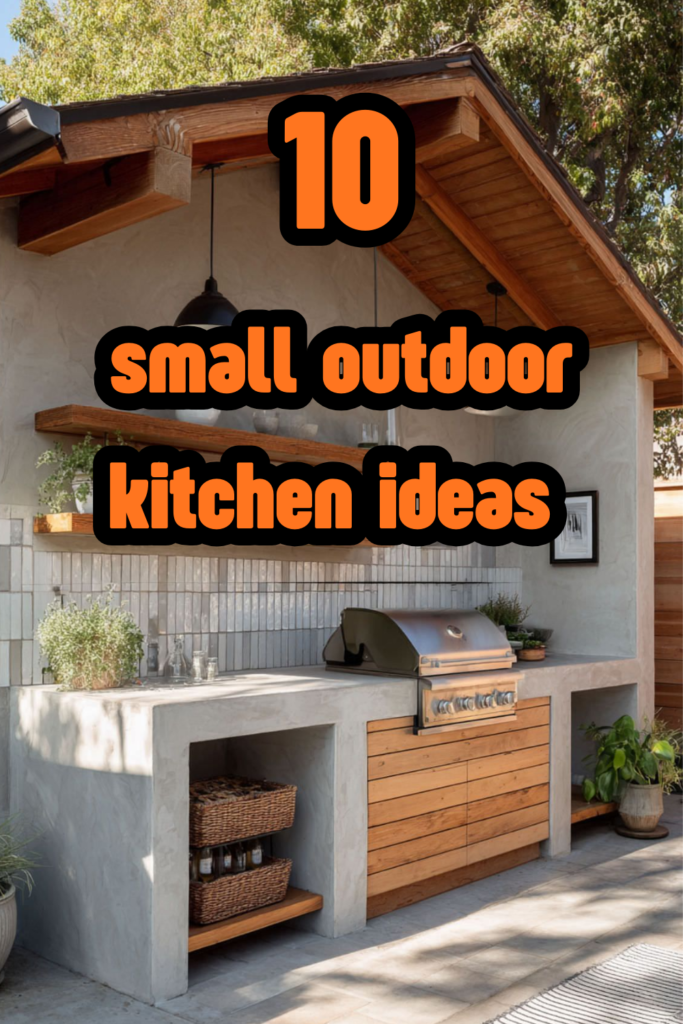
No space for a sprawling outdoor kitchen? You don’t need one. Some of the most functional, beautiful outdoor cooking setups take up no more room than a garden bench — and they transform summer evenings completely.
Whether you have a compact balcony, a narrow terrace, or a modest backyard, small outdoor kitchen ideas can give you everything you need: a place to grill, prep, and gather. This guide covers 10 inspiring layouts, smart space-saving tips, material choices, and the mistakes that catch most people off guard.
Compact outdoor kitchen design is not a compromise. Done right, it’s actually better — easier to build, faster to set up, simpler to maintain, and just as satisfying to cook in.
Why Choose a Small Outdoor Kitchen?
Benefits of compact outdoor kitchens
Small outdoor kitchens are faster to install, less expensive to build, and easier to keep clean. You spend less time managing the space and more time enjoying it. A focused layout forces you to prioritize what actually matters: a quality grill, a good work surface, and somewhere to put a cold drink.
Perfect for small gardens and terraces
Urban homes and modern builds rarely come with generous outdoor space. A well-planned small outdoor kitchen fits naturally into a terrace corner, against a garden wall, or along a fence — without eating into your lawn, seating, or play areas.
Budget-friendly and functional
Smaller footprint means lower material costs, fewer appliances to buy, and less hardscaping to pay for. Many small backyard kitchen designs come in under $2,000 — and some creative DIY builds cost far less than that.
10 Small Outdoor Kitchen Ideas to Inspire You
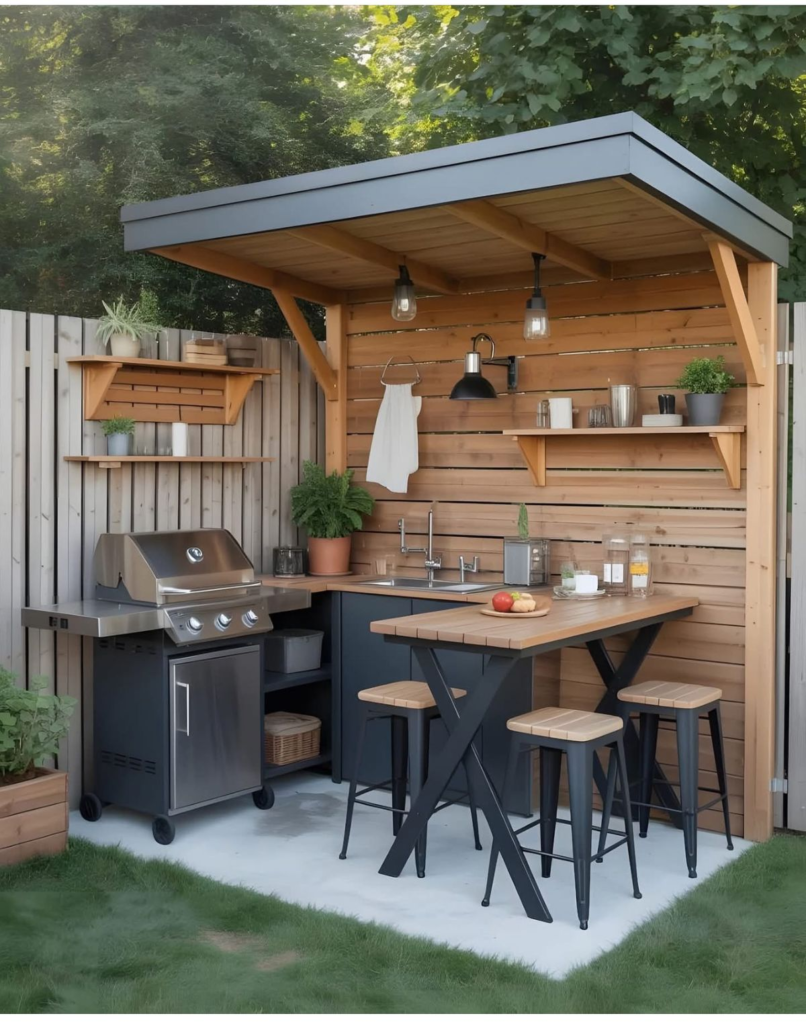
1. Minimalist BBQ Corner
Strip it back to the essentials: a built-in or freestanding grill and a single countertop surface beside it. Tuck this into a corner of the patio and you have a fully functional space-saving outdoor cooking area that doesn’t crowd the garden. Add a hook rail above for tools. Pro tip: choose a grill with a side burner built in — it replaces the need for extra cooking zones.
2. L-Shaped Compact Kitchen
Corners are wasted space in most outdoor setups. An L-shaped layout turns that corner into your kitchen hub — grill on one arm, prep counter on the other. This is one of the most efficient small outdoor kitchen ideas for backyards where you want maximum counter space without jutting into the open area.
3. Portable Outdoor Kitchen Setup
Not ready to commit to a fixed build? Modular carts and rolling stations give you a fully functional outdoor cooking area that moves with you — indoors in winter, rearranged for parties, stored when not needed. Look for stainless steel carts with locking wheels, built-in shelves, and hooks. Pro idea: pair two matching carts side by side for a seamless prep station that’s still completely movable.
4. Wall-Mounted Cooking Station
When floor space is the bottleneck, go vertical. A wall-mounted folding prep surface, a mounted grill shelf, and pegboard storage above can create a complete small outdoor kitchen on just a few feet of wall. Fold it flat when guests arrive and the space doubles as an entertaining area.
5. Rustic Wooden Outdoor Kitchen
Cedar, teak, or pressure-treated pine brings warmth and character to small outdoor kitchens in a way that concrete and steel can’t. A simple wooden frame with a stone or tile countertop, built around a gas grill, creates a cozy, natural vibe that feels like a seamless extension of the garden. Seal all wood with a UV-resistant outdoor finish every 1–2 years to prevent warping and splitting.
6. Modern Stainless Steel Setup
Stainless steel is the professional’s choice — and for good reason. It handles heat, moisture, grease, and weather without complaint. A brushed stainless countertop with matching cabinetry gives your compact outdoor kitchen a clean, restaurant-grade look that ages beautifully.
7. Outdoor Kitchen with Bar Counter
Add a raised bar counter along the outer edge of your kitchen and you’ve solved the entertaining problem. Guests perch there with drinks while you cook — everyone is together, nobody is underfoot. This layout works especially well in narrow spaces because the bar runs parallel to the kitchen, not perpendicular to it.
8. Built-In Small Kitchen Island
A small freestanding island — just 1.2m x 0.6m — can house a grill, a mini fridge, two drawers, and a generous prep surface. It looks intentional and polished, and works beautifully as the centerpiece of a patio that has a bit of open space around it.
9. Covered Outdoor Kitchen
A simple pergola, lean-to roof, or retractable awning over your small outdoor kitchen changes how often you actually use it. Rain stops being a deterrent. Evening cooking becomes comfortable. And the shade keeps the cooking zone cooler on hot days — which your grill (and you) will appreciate. Check local building codes before installing any permanent overhead structure, as some require permits.
10. Budget DIY Outdoor Kitchen
Cinder blocks, a bag of mortar, and a few concrete board panels are all you need to frame a basic outdoor kitchen structure. Top it with tile or stone, drop in a freestanding grill, and you have a solid, weather-proof cooking station for well under $1,000. Paint the blocks or face them with stone veneer for a polished finish.
Space Optimization Tips for Small Outdoor Kitchens
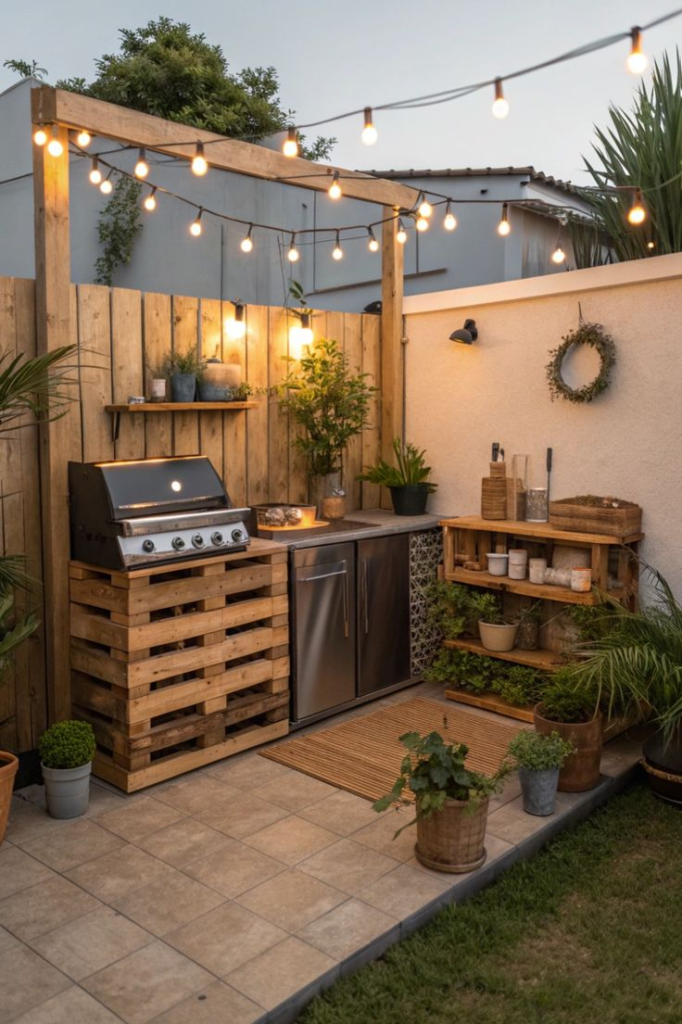
Use foldable or stackable furniture so the dining area disappears when not needed. Choose a grill with built-in cabinet storage underneath — it eliminates the need for a separate storage unit. Mount a magnetic knife strip and pegboard above the counter for tools and utensils. Keep the layout to a single work triangle: grill, prep surface, and trash/storage within two steps of each other. Use vertical space wherever possible — wall shelves, hanging racks, and tall narrow cabinets add capacity without eating into floor space. Opt for a drawer-style mini fridge rather than a swing-door model, since it needs no clearance space in front.
Materials and Essentials
For structure and surfaces, stainless steel is the most durable and low-maintenance choice. Natural stone countertops like granite or slate are heat-resistant and beautiful, though heavier to work with. Porcelain tile is affordable and easy to clean. Weather-resistant hardwoods like teak, ipe, or cedar bring warmth but need annual sealing. Cinder block is the go-to for affordable DIY builds.
For appliances, a quality grill is your main investment — don’t skimp here. After that, a compact outdoor sink makes the biggest practical difference to how the space actually works. A drawer-style undercounter fridge keeps drinks and marinades close. A side burner is worth adding if you want to cook sauces, boil water, or use a wok outdoors.
Common Mistakes to Avoid
Overcrowding the layout is the most common error. Resist the urge to add “just one more” appliance — space to move is non-negotiable in a compact outdoor kitchen. Choosing indoor materials like laminate countertops is another trap; they warp, swell, and stain outdoors within a single season. Skipping ventilation is a safety issue — even outdoor grills need clearance from walls, fences, and overhead structures, so check manufacturer guidelines before fixing anything in place. Building with no storage plan means you’ll spend every cooking session running inside for things; storage needs to be part of the design, not bolted on afterward. Finally, ignoring drainage leads to pooling water and mold on flat countertops — even a 1–2° pitch toward the outer edge makes a real difference.
FAQ
What is the best layout for a small outdoor kitchen? An L-shaped or straight galley layout works best in tight spaces. L-shaped gives you more counter space by using a corner efficiently, while a straight layout works well against a single wall or fence.
How much space do you need for an outdoor kitchen? A functional small outdoor kitchen can fit in as little as 2m x 1.5m (roughly 6.5ft x 5ft). That’s enough for a grill, a short countertop, and minimal storage. Add a bar counter and you’ll want closer to 3m x 2m to stay comfortable.
What appliances are essential? A good grill is the only true essential. After that, a small sink and a mini fridge make the biggest practical difference. Everything else — side burners, pizza ovens, built-in speakers — can wait until you know how you actually use the space.
Can I build one myself? Yes. A DIY outdoor kitchen built from cinder blocks or modular carts is a realistic weekend project for most homeowners. Gas plumbing and electrical connections should involve a licensed professional for safety and code compliance.
Start Designing Your Compact Outdoor Kitchen Today
Small outdoor kitchens prove that space is rarely the real constraint — vision is. With a clear layout, the right materials, and a few smart choices, even the most modest backyard or terrace can become a place you genuinely want to cook and gather in all summer long.
Pick one idea from this list that fits your space and budget, sketch a rough layout, and start from there. The best outdoor kitchen is the one you actually build.