
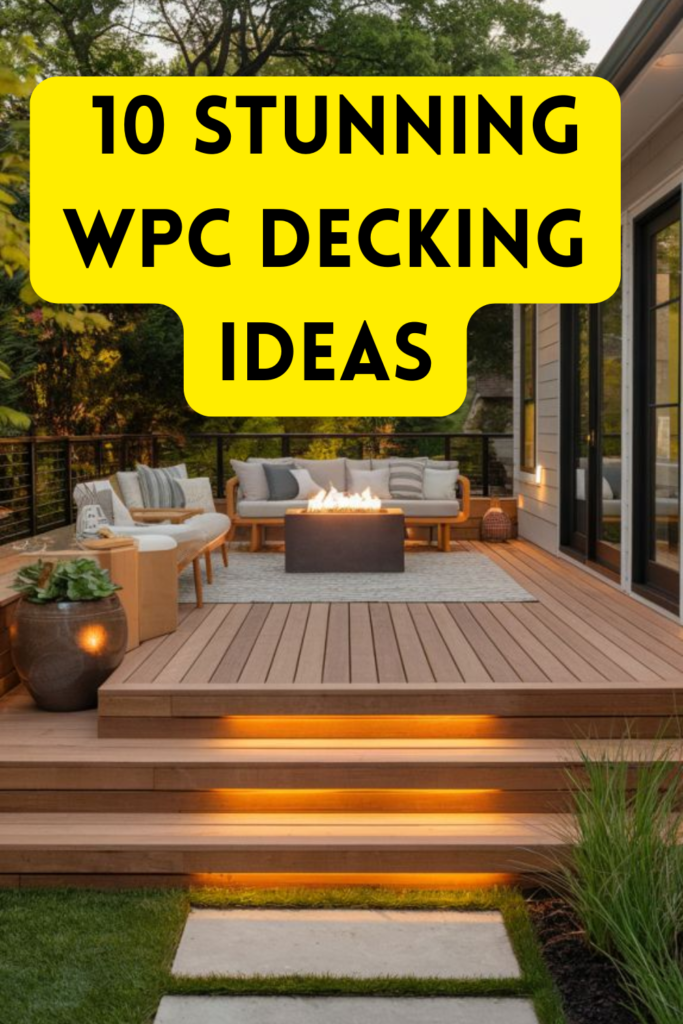
If you’ve been dreaming of a beautiful, low-maintenance outdoor living area, wood plastic composite decking might be exactly what you need. WPC decking has surged in popularity over the past few years, and for good reason — it combines the natural warmth of timber aesthetics with the resilience of modern engineering materials. Whether you’re weighing up wood or composite decking for a full backyard renovation, or simply looking to refresh a tired patio, the ideas below will spark serious inspiration.
Let’s explore ten creative ways to use WPC decking that go far beyond the basics.
Table of Contents
- Modern Minimalist WPC Deck
- Small Space WPC Deck
- Poolside Composite Deck
- Multi-Level Deck
- Garden Integrated Deck
- Rooftop Deck
- Dark Color Composite Deck
- Light Wood Finish Deck
- Built-in Seating Deck
- Luxury Outdoor Lounge Deck
Idea 1: Modern Minimalist WPC Deck
Clean lines, neutral tones, and an uncluttered layout — the minimalist approach to wood plastic composite decking is having a serious moment. Think slate-grey boards laid in a single direction, paired with black powder-coated railings and simple planter boxes.
Why it works: A minimalist deck requires almost zero upkeep. No painting, no staining, no warping boards to worry about. The composite surface stays looking fresh year after year.
Pro tip: Choose boards with a subtle grain texture rather than a completely smooth finish — it adds visual warmth without disrupting the clean aesthetic.
Idea 2: Small Space WPC Deck
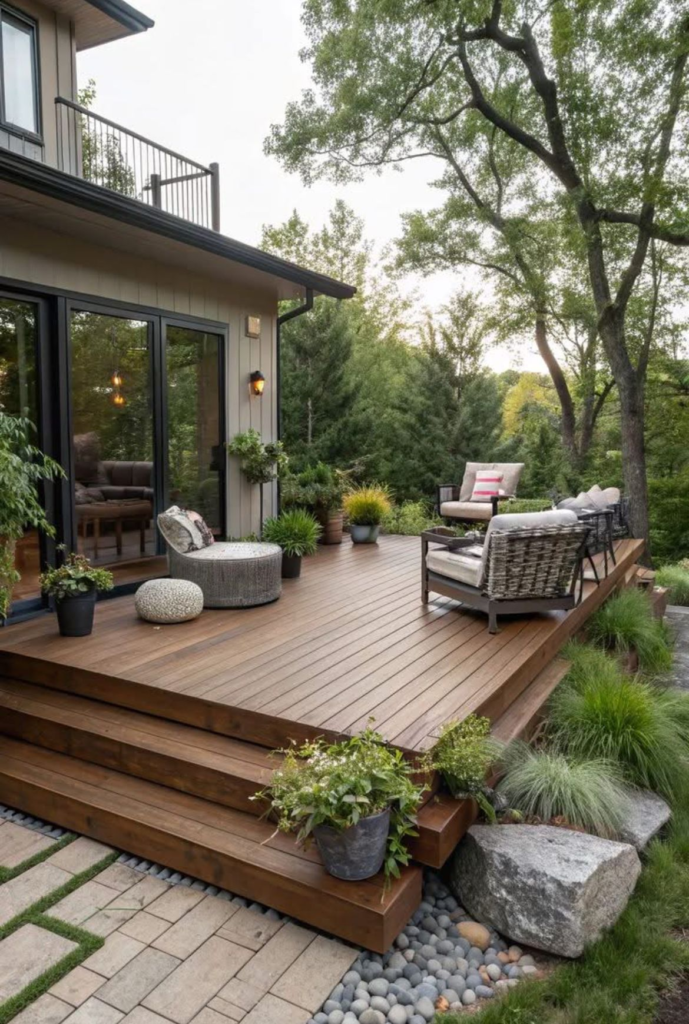
Don’t let a compact yard hold you back. A well-designed small space deck using wooden or composite decking can make even a 3m x 3m patio feel like a proper outdoor room. Laying boards diagonally creates an illusion of greater width, and a built-in storage bench doubles up on functionality.
Why it works: WPC tiles or short-run boards are ideal for small spaces — they’re easy to cut, configure, and expand later if your outdoor area grows.
Pro tip: Stick to lighter board colours in small spaces. Pale ash and sand tones reflect light and make the area feel more open and airy.
Idea 3: Poolside Composite Deck
Water and decking don’t always get along — but WPC is the exception. Poolside composite decks are slip-resistant, moisture-tolerant, and won’t fade, splinter, or rot from constant splash exposure.
Why it works: Unlike natural timber, wood plastic composite decking won’t absorb water, meaning no swelling, no cracking, and no barefoot splinter hazards for kids and guests.
Pro tip: Choose a grooved board profile for poolside areas — the channels help water drain away faster, reducing slip risk even further.
Idea 4: Multi-Level Deck
If your garden has a natural slope or you want to define distinct zones (dining, lounging, garden access), a multi-level design using wood or composite decking is a game-changer. Two or three connected platforms connected by wide steps create a resort-like feel.
Why it works: Multi-level decks add architectural interest and make sloped gardens actually usable rather than awkward. WPC’s structural stability makes it ideal for elevated sections.
Pro tip: Use matching fascia boards on step risers to create a seamless, built-in look across all levels.
Idea 5: Garden Integrated Deck
Rather than treating your deck as separate from the garden, design it to flow into planting beds, gravel paths, and lawn edges. Cut-outs in the decking can frame specimen trees or ornamental grasses beautifully.
Why it works: The look is organic and relaxed rather than boxy. Wooden or composite decking in earthy tones like teak or cedar blend naturally with surrounding greenery.
Pro tip: Use hidden fasteners between boards for a flush, clean surface — no screw heads interrupting the natural look.
Idea 6: Rooftop Deck
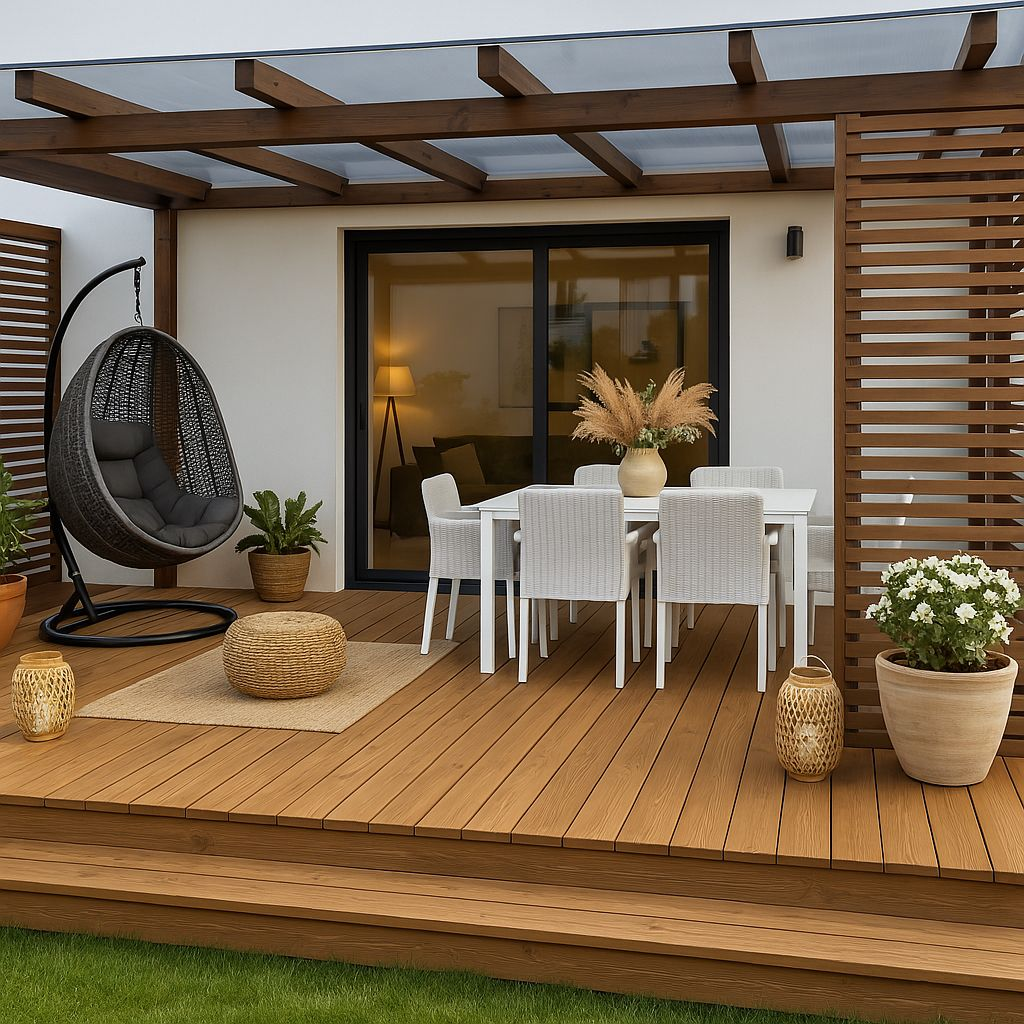
Rooftop spaces are underused gold in urban homes. WPC decking tiles are particularly popular for rooftop applications because they’re lightweight, self-draining, and require no adhesive — they simply click together over existing waterproof membranes.
Why it works: The material handles UV exposure, extreme temperature swings, and wind-driven rain without degrading — exactly what a rooftop environment demands.
Pro tip: Always check your roof’s load-bearing capacity before installation, and choose a ventilated tile system that allows air circulation beneath the boards.
Idea 7: Dark Color Composite Deck
Charcoal, anthracite, and deep espresso composite boards have a sophisticated, dramatic quality that photographs stunningly and pairs beautifully with white rendered walls or light stone paving.
Why it works: Dark WPC boards absorb heat, which is lovely in cooler climates for extending the season. In warmer regions, simply pair with a pergola or shade sail overhead.
Pro tip: Dark boards show dust and pollen more readily — a quick hose-down every few weeks keeps them looking showroom-sharp.
Idea 8: Light Wood Finish Deck
On the opposite end of the spectrum, blonde oak, sand, and driftwood tones give a Scandinavian-inspired freshness to any outdoor space. Light composite boards pair naturally with rattan furniture, linen cushions, and terracotta planters.
Why it works: Light finishes disguise everyday dust and debris far better than dark boards, and they keep the surface cooler underfoot in direct sunlight.
Pro tip: Look for boards with a dual-tone or brushed grain finish — they add depth and realism that single-colour boards lack.
Idea 9: Built-in Seating Deck
Integrate bench seating, planters, and even storage directly into your deck design. Built-in seating defines the space, reduces the need for freestanding furniture, and creates a polished, considered look.
Why it works: Using the same WPC boards for benches and fascia creates visual cohesion. Everything matches, nothing looks afterthought.
Pro tip: Add cushions in marine-grade fabric for comfort, and use sealed composite lumber for bench frames to ensure the same longevity as your deck surface.
Idea 10: Luxury Outdoor Lounge Deck
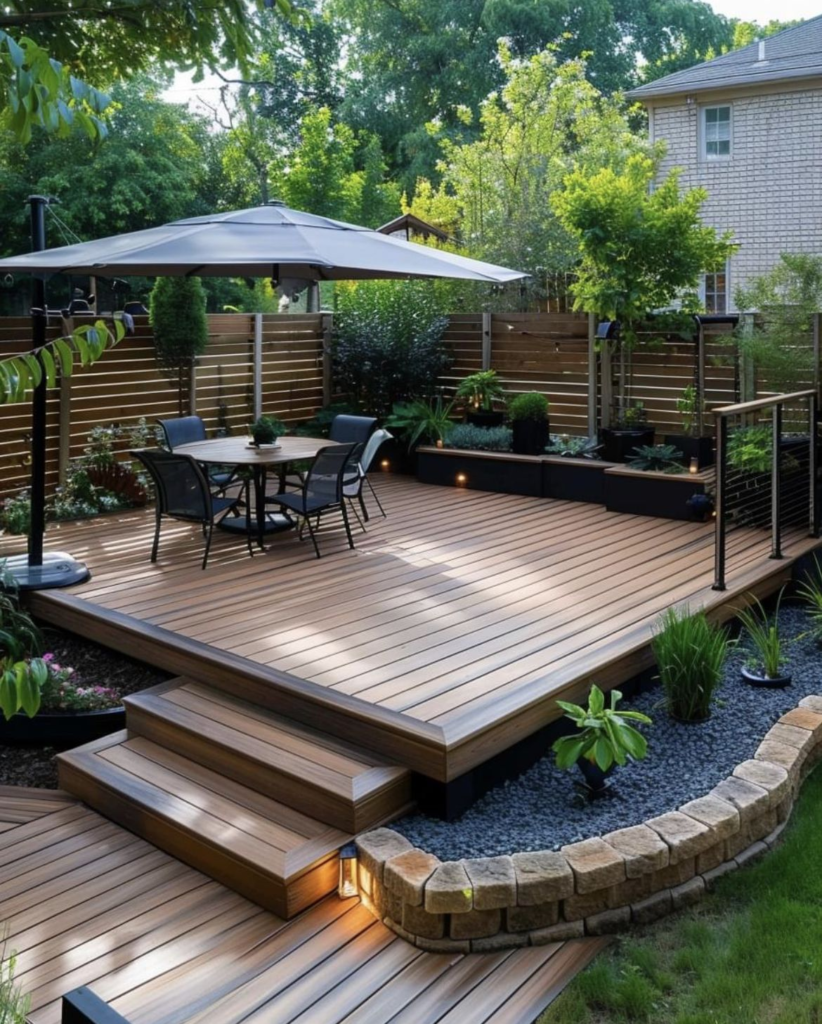
Go all-in on the resort experience: wide-board composite decking, an overhead pergola with climbing plants, a built-in fire pit, and premium outdoor lighting. This is the kind of space you’d pay for at a boutique hotel — and with WPC, it’s far more achievable at home than you’d think.
Why it works: High-end wood plastic composite decking in wide-board formats (140mm+) gives an authentically luxurious, bespoke feel. Add layered lighting (recessed floor lights, string lights, a statement pendant under the pergola) and you have a space that works from morning coffee to midnight cocktails.
Pro tip: Commission a landscape architect for a luxury build — even a short consultation can help you avoid costly layout mistakes.
Why Choose WPC Decking?
There are compelling reasons why more homeowners are choosing wood plastic composite decking over traditional timber or PVC alternatives:
Durability — WPC boards are engineered to resist rot, insects, mould, and UV degradation. Most quality products carry 20–25 year warranties, compared to 10–15 years for pressure-treated timber.
Weather resistance — Whether you’re dealing with coastal salt air, heavy rainfall, or intense summer sun, composite boards hold their colour and structural integrity far better than natural wood.
Low maintenance — No sanding, no staining, no annual sealing. An occasional clean with warm soapy water is all most WPC decks ever need.
Sustainability — Many WPC products are manufactured using recycled wood fibre and recycled plastic, diverting both from landfill. If eco-credentials matter to you, look for brands with FSC certification or high recycled content percentages.
Splinter-free surface — Particularly important for families with young children or pets.
WPC Decking Cost Guide
Budget is always a consideration. Here’s a rough breakdown to help you plan:
Entry-level WPC decking typically costs between £20–£35 per square metre for materials alone. These boards are often hollow-core and come with shorter warranties.
Mid-range composite boards sit between £40–£65 per square metre. Solid-core or capped composite boards in this range offer good performance and realistic wood-grain aesthetics.
Premium WPC decking can reach £70–£120+ per square metre. At this level, you’re getting wide-format boards, multi-tone finishes, Class A fire ratings, and warranties of 25 years or more.
Installation costs add roughly £30–£60 per square metre depending on your location and the complexity of the project (subframe work, multi-level builds, etc.).
For a typical 20m² backyard deck, expect a total installed cost somewhere between £1,200 on the budget end to £3,500+ for a premium build.
FAQ
Is WPC decking better than wood? For most homeowners, yes — particularly over the long term. WPC requires far less maintenance, resists moisture and insects natively, and holds its colour without annual treatments. Natural timber has an authenticity that some people prefer aesthetically, but the practical advantages of composite decking are difficult to argue against.
How long does composite decking last? Quality wood plastic composite decking typically lasts 25–30 years with minimal care. Many premium brands offer warranties in the 25-year range. By comparison, untreated or pressure-treated timber may need replacing or significant restoration after 10–15 years.
Is WPC decking expensive? Upfront, WPC costs more per square metre than basic pressure-treated timber. However, when you factor in the cost of staining, sealing, and maintenance over a decade or more, composite decking often works out comparable — or cheaper — in total lifetime cost.
Can WPC decking be installed over an existing surface? WPC tiles can often be installed directly over existing concrete or paving using a pedestal or click-together system. Full board installations generally require a proper timber or aluminium subframe for stability and airflow.
Does WPC decking get hot in summer? Darker boards can get warm underfoot in direct sun — similar to stone paving. Choosing lighter colours, installing shade structures, or selecting boards with cooling technology (some manufacturers offer this) all help manage surface temperature.
Conclusion
Whether you’re after a sleek minimalist terrace, a resort-style pool deck, or a cosy garden-integrated retreat, wood plastic composite decking gives you the design flexibility to make it happen — without the maintenance headaches of natural timber. From small balcony upgrades to full luxury outdoor living rooms, the 10 ideas above prove that composite decking is anything but boring.
Ready to get started? Take your favourite idea, get a few quotes from local installers, and order some samples to see how different board colours look against your home’s exterior before you commit. You might be surprised how quickly a vision becomes reality.