
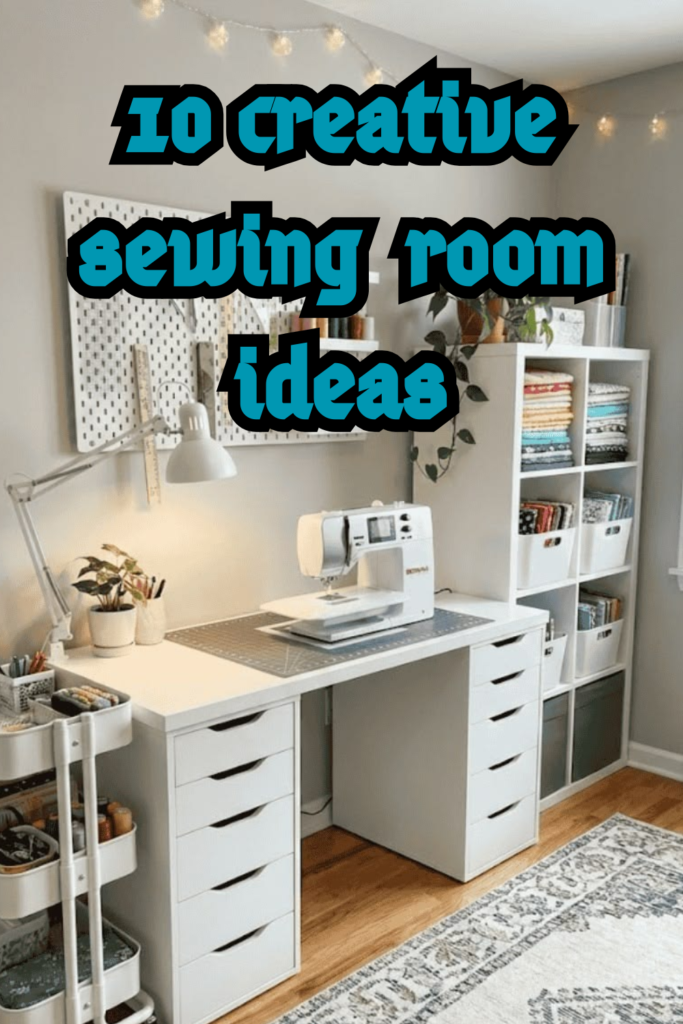
There’s something deeply satisfying about walking into a sewing room that actually works — a space where every tool has a home, light falls exactly where you need it, and creativity flows the moment you sit down. Whether you’re a seasoned seamstress or just beginning your quilting journey, the environment you stitch in matters more than most people realize.
A well-designed sewing room isn’t just about aesthetics. It’s about reducing the friction between inspiration and execution. When your space is organized, your mind is free to focus on the craft itself rather than hunting for the right thread or untangling a pile of fabric. Studies in environmental psychology consistently show that an organized, personalized workspace boosts both productivity and creative output — and your sewing room is no exception.
In this guide, we’re diving deep into the best sewing room ideas to help you design a space that’s functional, inspiring, and uniquely yours — whether you’re working with a sprawling studio or a compact corner of your bedroom.
Table of Contents
- Maximize Your Space with Smart Storage
- Optimize Your Lighting for Precision Work
- Create a Dedicated Workstation
- Organize Your Fabric Collection
- Use Vertical Space Creatively
- Design a Cutting Zone
- Add an Inspiration Board
- Incorporate Color and Personal Decor
- Go Green with Plants
- Think Small with Small Sewing Space Ideas
10 Sewing Room Ideas to Inspire Your Creativity
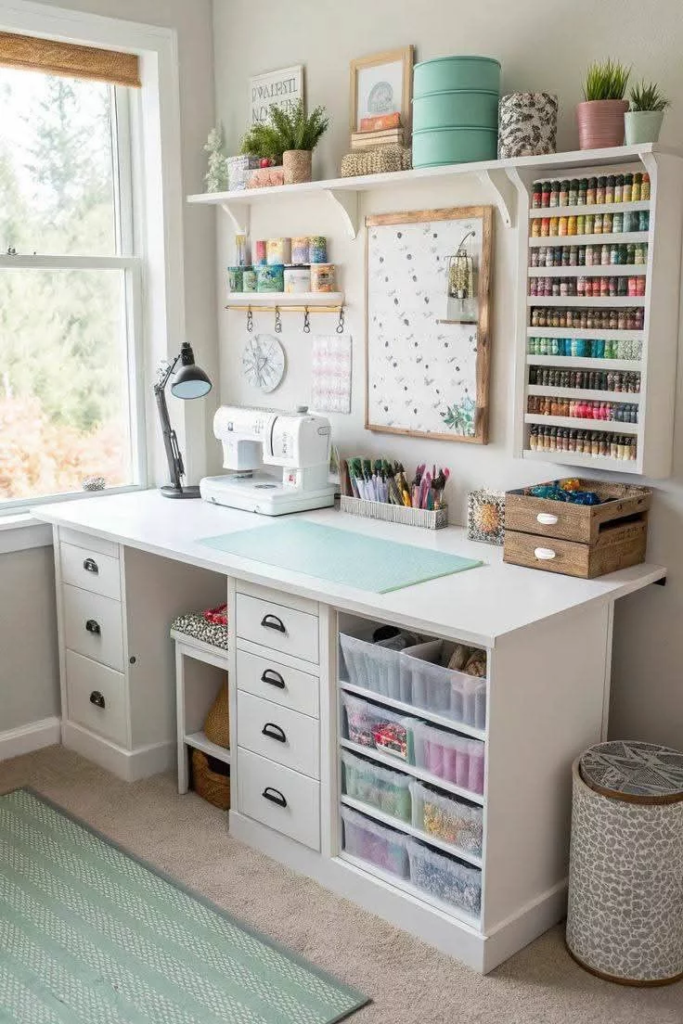
1. Maximize Your Space with Smart Storage
The number one complaint among home sewists? Not enough storage. The good news is that smart storage doesn’t require a large room — it requires intentional design.
Start with open shelving along your walls to store fabric bolts, thread racks, and notions boxes. Pegboards are an absolute game-changer for a sewing room: mount them above your desk to hang scissors, rulers, rotary cutters, and even spools of thread on hooks. They keep everything visible and within arm’s reach, which dramatically cuts down on the time you spend searching.
Drawer organizers inside your sewing table are equally powerful. Dedicate one drawer to bobbins and needles, another to buttons and zippers, and a third to your most-used tools. The clearer the system, the more brain space you have for actual creating.
Pro tip: Clear acrylic bins are your best friends. You can see the contents at a glance, and they stack beautifully on shelves.
2. Optimize Your Lighting for Precision Work
Sewing requires exceptional visual precision. A single misread marking can ruin hours of work. That’s why sewing room lighting is one of the most critical — and most overlooked — elements of a well-functioning space.
Natural light is always the first priority. If you can position your sewing machine near a window, do it. North-facing windows offer diffused, consistent daylight that doesn’t create harsh shadows or glare. But since you’ll often be sewing after dark, layered artificial lighting is essential.
Pair an overhead ambient light with a dedicated task lamp directly above your machine — ideally an LED daylight bulb rated at 5000–6500K color temperature. These mimic natural daylight and help you distinguish between similar fabric colors and see fine details on dark materials. Under-shelf lighting along your cutting table adds another useful layer.
A bright sewing space isn’t just comfortable — it protects your eyesight long-term.
3. Create a Dedicated Workstation
Consistency in your sewing workstation setup reduces setup time and builds a sense of ritual around your craft. Instead of pulling your machine out of a closet every time you want to sew, design a permanent station where everything is ready to go.
Invest in a sewing table with a drop-leaf extension for extra surface area, or a dedicated sewing cabinet that folds closed when not in use. Position your machine so your elbows are at a comfortable 90-degree angle and your eyes are level with the presser foot. Ergonomics matter enormously when you’re spending hours at the machine.
Keep your most-used accessories — your current project, the matching thread, your seam ripper — right at hand. Reserve a small tray or magnetic dish for pins and needles so they’re never scattered across the table.
4. Organize Your Fabric Collection
Fabric can overtake a sewing room faster than almost anything else. Pre-cuts, yardage, remnants, special occasion fabrics — they accumulate quickly, and without a system, they become chaos.
Sort your fabric by type or color and store it in one of three ways: folded and stacked on open shelves (visually beautiful and easy to browse), rolled onto cardboard bolts, or tucked into labeled fabric bins. The rolling method works especially well for larger yardage and prevents wrinkles.
A fabric inventory list — even a simple handwritten one — prevents you from buying duplicates of something you already own. For those who love a digital solution, there are even apps designed specifically for sewists to catalog their stash with photos.
5. Use Vertical Space Creatively
Floor space is finite. Vertical space is almost always underused. This is especially important if you’re exploring small sewing space ideas where every square foot counts.
Mount shelves all the way to the ceiling — use the lower shelves for items you access daily and the upper shelves for seasonal or archival fabric. A tall, narrow bookshelf with baskets works beautifully for storing fabric scraps and notions. Hooks on the backs of doors are perfect for hanging rulers, tote bags of current projects, or even pressing cloths.
Tall pegboard panels can run floor to ceiling along one wall, creating an entire organizational ecosystem for your tools without consuming any floor space at all.
6. Design a Cutting Zone
Cutting is one of the most physically demanding parts of sewing — bending over a too-low table leads to back pain fast. A dedicated cutting zone set at counter height (around 36 inches) transforms this task from a chore into a comfortable part of your workflow.
If you don’t have room for a permanent cutting table, a folding table that can be stored against a wall is an excellent alternative. Cover the surface with a self-healing cutting mat large enough to accommodate your biggest patterns. Keep your rotary cutters, acrylic rulers, and pattern weights within reach on a nearby shelf or pegboard.
Good lighting directly above your cutting zone is just as important here as at your sewing machine.
7. Add an Inspiration Board
Every creative person needs a visual anchor — a place to pin color swatches, magazine clippings, pattern samples, and photos of finished projects that inspire you. An inspiration board transforms a blank wall into a living mood board that evolves with your current projects and tastes.
Use a large corkboard, a section of pegboard painted a neutral color, or even a magnetic whiteboard. Rotate it seasonally to keep it fresh. Seeing your vision laid out visually helps you stay focused and excited about your projects, even when a tricky seam is testing your patience.
8. Incorporate Color and Personal Decor
Your sewing room should feel like you. Color, texture, and personal touches make a workspace feel inviting rather than clinical. Paint the walls in a shade that energizes or calms you depending on your creative personality — soft sage greens and warm whites are perennially popular among sewists for their calming clarity.
Add a small rug under your sewing table for warmth and comfort underfoot. Hang framed vintage sewing patterns or fabric art on the walls. Display a collection of antique buttons in glass jars. These details don’t just look beautiful — they constantly remind you why you fell in love with sewing in the first place.
9. Go Green with Plants
Plants have a scientifically backed effect on mood and productivity. Even a few low-maintenance greenery additions — a trailing pothos on a shelf, a succulent on your windowsill, a small fiddle-leaf fig in the corner — make your sewing room feel alive and refreshing.
Choose varieties that thrive in the light conditions your room actually offers. Low-light tolerant plants like snake plants and ZZ plants are nearly indestructible. If you have a sunny window, herbs like lavender and rosemary add both greenery and a subtle, calming scent.
10. Think Small with Small Sewing Space Ideas
Not everyone has the luxury of a dedicated sewing studio — and that’s perfectly okay. Some of the most creative small sewing space ideas come from constraints.
A corner of a bedroom can become a fully functional sewing nook with a wall-mounted fold-down table, a small pegboard above it, and a rolling cart for storage that tucks away when not in use. A large closet — sometimes called a “sewing closet” — can be retrofitted with a drop-down desk, built-in shelves, and even a small cutting surface when the doors swing open.
The key principles for small spaces are: go vertical, keep only what you use regularly within immediate reach, and choose furniture that serves double duty.
Extra Tips to Keep Your Sewing Room Functional and Inspiring
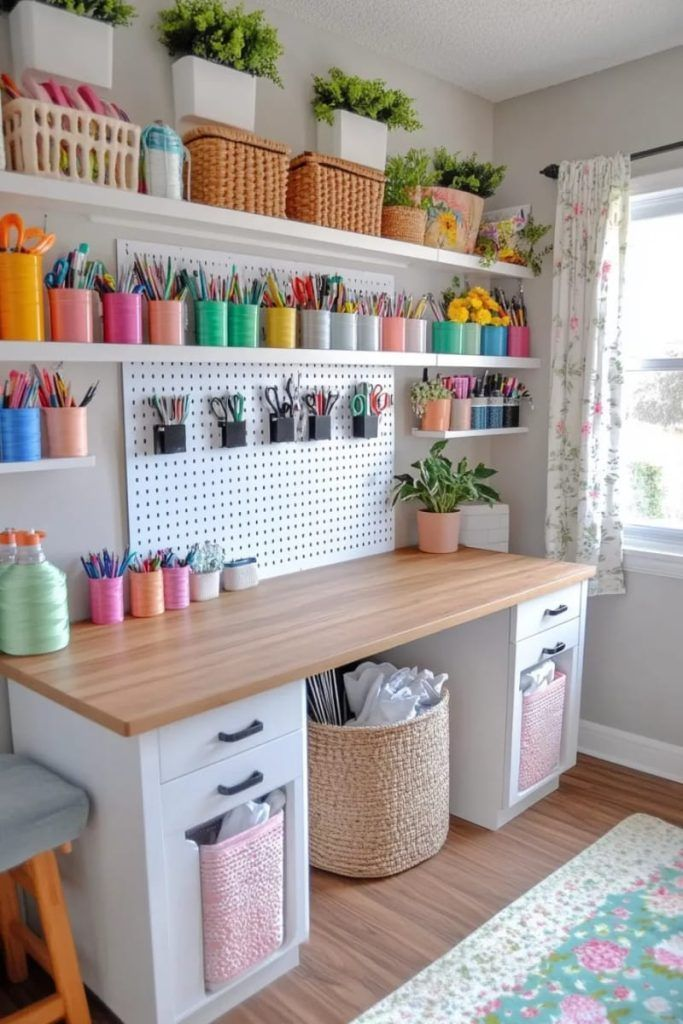
- Label everything. Bins, drawers, shelves — when every container is labeled, putting things away takes seconds.
- Do a 10-minute tidy after every sewing session. It prevents clutter from accumulating and keeps your space ready to go.
- Invest in a good iron and ironing station. Pressing is half of sewing. A wall-mounted ironing board saves floor space without sacrificing function.
- Use a design wall (a piece of batting or flannel hung on the wall) to step back and evaluate quilt layouts and garment pieces from a distance.
- Rotate your projects. Keep only your active project on your desk. Store works-in-progress in clearly labeled project bags.
- Go budget-friendly with thrift stores. Old dressers, bookshelves, and storage cabinets found secondhand can be painted and repurposed beautifully.
- Create a dedicated thread station. A simple wooden thread rack mounted on the wall keeps thread organized, accessible, and doubles as gorgeous decor.
Conclusion
A thoughtfully designed sewing room is so much more than storage and furniture — it’s the environment where your creativity gets to breathe. Whether you’re overhauling a full room or carving out a small sewing space in a corner of your home, every intentional improvement makes your time at the machine more joyful, more productive, and more inspired.
From smart vertical storage and precision lighting to personal decor and ergonomic workstations, these sewing room ideas offer something for every sewist at every stage of their journey. The best part? You don’t have to implement everything at once. Start with one idea that addresses your biggest current frustration, and build from there