
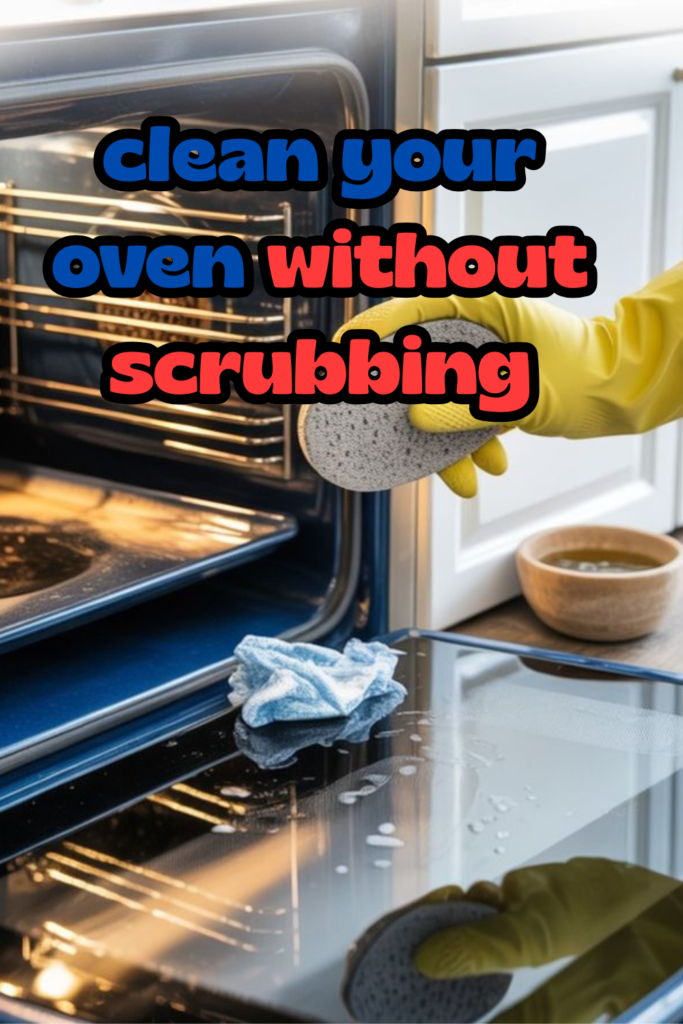
We’ve all been there: you open your oven door and are greeted by stubborn, baked-on stains and a layer of grease that looks like it’s been fossilized on the walls for centuries. It’s the aftermath of delicious roasts, cheesy casseroles, and homemade pizzas that have left their mark. For a long time, the only solution seemed to be to roll up your sleeves and scrub vigorously with harsh chemicals. But beyond the chore itself, there’s a real concern: is the exposure to the toxic fumes from these conventional cleaners really safe for my family and my pets?
Take a deep breath. There is a better way. In this article, we’re going to reveal an unbeatable technique for how to clean oven without scrubbing using simple, natural ingredients that are just as effective as store-bought cleaners. You’re going to learn how to say goodbye to harsh chemicals and get back to a sparkling oven with minimal effort.
Why Avoid Harsh Chemical Oven Cleaners?
Before we get to the practical part, let’s understand why it’s better to turn to gentler alternatives. Traditional oven cleaners are often potent chemical cocktails. Their use comes with several major drawbacks:
- Health Risks: The fumes released can severely irritate the respiratory tract, skin, and eyes. In an enclosed space like the kitchen, inhaling these fumes is particularly concerning, especially for children, the elderly, or pets.
- Environmental Impact: These products contain corrosive substances that, once rinsed away, end up in wastewater and can harm the environment. Choosing a natural oven cleaner is a simple gesture for the planet.
- Oven Damage: In the long run, repeated use of overly aggressive products can damage your oven’s interior enamel and even the heating elements.
By opting for a chemical-free cleaning method, you protect your health, your wallet, and your appliance, all while adopting an eco-friendly kitchen cleaning routine.
What You’ll Need
For this deep clean, no need to buy expensive products. Your kitchen cupboard likely has everything you need:
- Baking soda: The star of natural cleaning. It’s mildly abrasive, so it lifts dirt without scratching.
- White vinegar: Its acidity cuts through grease and deodorizes.
- Lemon (optional): For its degreasing power and fresh scent.
- A spray bottle: To spray the vinegar.
- A damp cloth: Preferably microfiber.
- (Optional) A plastic spatula: To scrape off the most stubborn residues without scratching.
Speaking of eco-friendly routines, did you know these principles can be applied throughout the house? Discover how to adopt a similar approach for other rooms in our complete guide on [the essentials of natural cleaning for the whole home].
Step-by-Step: How to Deep Clean Your Oven Without Scrubbing
Follow these simple steps, and you’ll see the magic happen. The secret is letting the natural ingredients do the work for you.
Step 1: Remove the Oven Racks
The first thing to do is take out all the racks. Set them aside; we’ll clean them separately. Take this opportunity to remove any large debris from the oven bottom with a small brush or a dry cloth.
Step 2: Make the Natural Cleaning Paste
In a bowl, mix about half a cup of baking soda with a few tablespoons of water. You want to get a thick, spreadable paste, similar to the texture of toothpaste. If it’s too runny, it will drip; too dry, and it will be hard to spread.
Step 3: Apply and Let It Sit Overnight
Wearing gloves (or with bare hands), generously apply this paste to all the interior walls of the oven, focusing on the dirtiest areas. Be careful to avoid the heating elements. Close the door and… that’s it! Let it sit ideally for 12 hours, or overnight. The paste will soften and lift the ingrained grease deep down.
💡 Pro Tip: If the paste turns brown, it’s a good sign! That means it’s absorbing the grease.
Step 4: Wipe Away Grease Easily
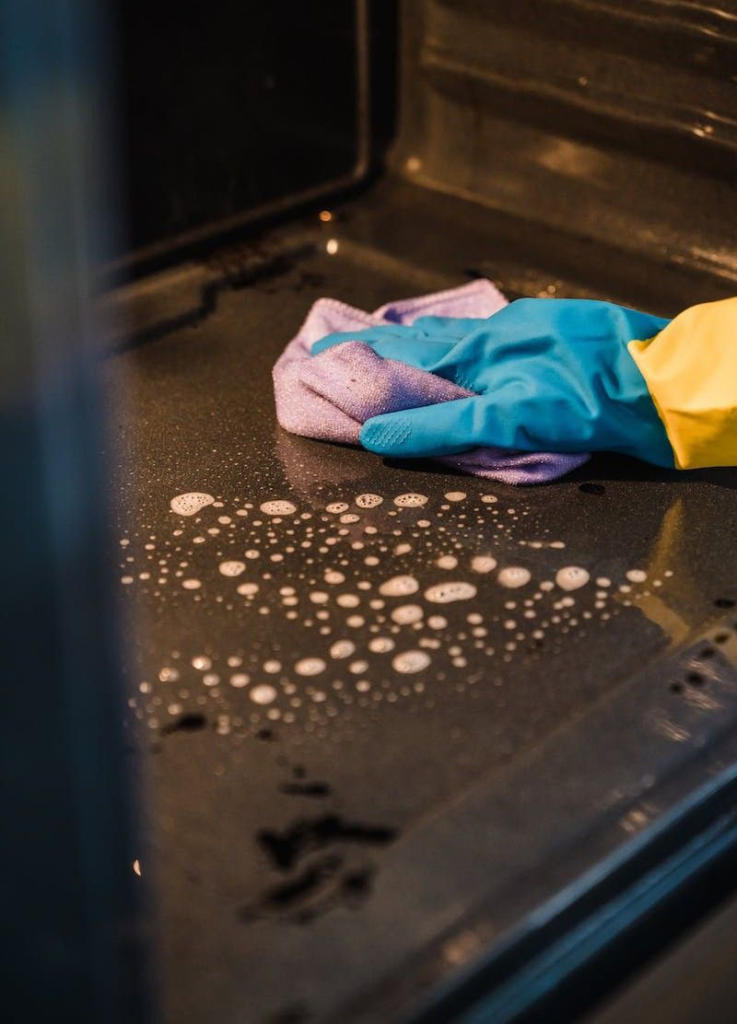
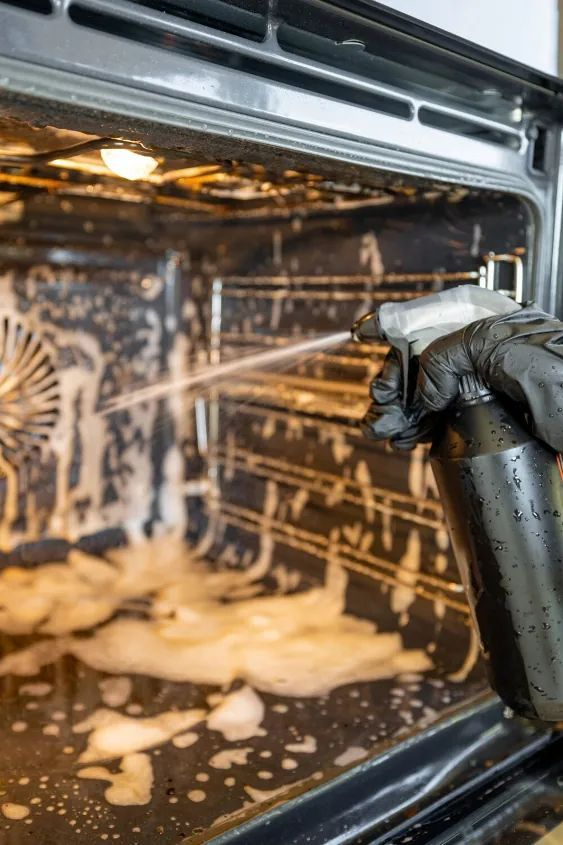
The next day, get a damp cloth and a plastic spatula. Wipe off as much of the dried paste as possible. For the rest, spray white vinegar generously over it. The chemical reaction will cause it to fizz slightly. This fizzing action helps lift the last residues. All that’s left is to wipe everything clean with your damp cloth. The grease comes off without any effort!
Step 5: Clean the Oven Glass Door
Apply the same paste to the inside of the glass door. Let it sit for 30 minutes to an hour. Spray with vinegar and wipe clean. For a streak-free shine, finish by wiping with a cloth dampened with a little pure vinegar.
Pinterest Tip: Take a “before/after” photo of your oven with your phone to illustrate the effectiveness of this method. The result is always astonishing!
Pro Tips for Extremely Dirty Ovens
If your oven hasn’t been cleaned in months (or years!), the basic method might need a little extra power. Here are some oven cleaning hacks to try:
- Repeat the Process: After a first cleaning, a thin layer of grease might persist. Simply reapply the paste only to the stubborn areas and let it sit for a few more hours.
- The Steam Trick: Before applying the paste, boil a pot of water inside the empty oven for 30 minutes. The steam will pre-soften the most tenacious grime, boosting the baking soda’s action. This is THE technique to remove burnt grease from oven.
- The Lemon Heat Method: For an extra degreasing and deodorizing boost, place an oven-safe dish filled with water and lemon slices inside. Heat at 120°C (250°F) for 30 minutes. The lemony steam works wonders, especially on the glass door. It’s perfect for those searching how to clean very dirty oven naturally.
How Often Should You Deep Clean Your Oven?
The frequency depends on your usage, but here’s a simple rule of thumb:
- Deep clean (this method): Every 3 months for average family use.
- Light cleaning: After any dish that bubbles over, once the oven is cool, a simple wipe with a damp cloth can prevent buildup.
- The tell-tale signs: If your oven smokes when you preheat it, or if a burnt smell lingers in your food, it’s time to take action!
Common Mistakes to Avoid
To preserve your oven and ensure your safety, avoid these classic pitfalls:
- Using metal scrubbers: They will irrevocably scratch the enamel, creating spots where dirt will cling even more stubbornly.
- Mixing chemicals: Never mix products like bleach with vinegar or ammonia. This can create toxic gases.
- Cleaning while the oven is hot: Always wait for the oven to be completely cool before applying your paste or cleaning it, to avoid burns and prevent the dirt from “baking” on further.
FAQs (Very Important for SEO)
Q: Can baking soda really clean an oven?
A: Absolutely! Baking soda is a gentle yet effective natural cleaner. It acts as a mild abrasive that lifts grease and carbonized residue without damaging surfaces, especially when given enough time to work.
Q: How long should baking soda sit in the oven?
A: For optimal, effortless results, it’s recommended to let the baking soda paste sit for at least 12 hours, ideally overnight. For a very dirty oven, you can even leave it for up to 24 hours.
Q: Does vinegar damage oven surfaces?
A: No, diluted white vinegar is safe for your oven’s enamel and glass. Its acidity is perfect for dissolving grease. You just shouldn’t leave it in prolonged contact with certain metals like unprotected aluminum or cast iron.
Q: Can I use this method on self-cleaning ovens?
A: Yes, absolutely. This natural method is an excellent complement to a self-cleaning (pyrolytic) function. However, keep in mind that the self-clean cycle is already very effective at burning off residues. If you use this method, make sure not to run a self-cleaning cycle immediately after, as the damp paste could potentially damage the mechanism. Always check your appliance’s manual.
Q: What’s the fastest way to clean oven glass?
A: The combination of the lemon steam trick and the baking soda paste is unbeatable. The steam pre-loosens the grease, and the paste finishes the job for a spotless, streak-free result.
By following these tips, you now have the know-how for effortless, eco-friendly oven cleaning. Not only do you save time and energy, but you also create a healthier environment in your kitchen. So, are you ready to say goodbye to the scrubbing chore?