
Does your bathroom sink drain slower than it should? Maybe there’s a funky smell creeping up from the pipes, or you can see a dark, slimy buildup around the drain cover. You’re not alone — it’s one of the most common household annoyances, and most people reach straight for a bottle of harsh chemical drain cleaner. But here’s the thing: you don’t need it. Learning how to clean a bathroom sink drain with natural ingredients is not only easier on your pipes and the environment, it’s also cheaper and surprisingly effective. By the end of this guide, you’ll have a simple, proven routine to keep your drain clean, clear, and odor-free — no chemicals required.
Why Bathroom Sink Drains Get Clogged
Understanding what’s causing the problem makes it a lot easier to fix it for good.
Hair Buildup
Even short hair accumulates inside the drain over time, tangling with other debris and forming a net that catches everything else. It’s one of the leading causes of a slow draining bathroom sink.
Soap Scum and Toothpaste Residue
Bar soap and toothpaste leave behind a waxy, sticky film on pipe walls. Over weeks and months, this residue thickens and narrows the pipe opening, contributing directly to a clogged bathroom drain.
Hard Water Deposits
If you live in an area with hard water, mineral deposits — primarily calcium and magnesium — build up inside pipes over time. These deposits are stubborn and can significantly reduce water flow.
Bacteria Causing Odor
The warm, moist environment inside your drain is a perfect breeding ground for bacteria and mold. This is usually the culprit behind a smelly sink drain. The bacteria feed on trapped organic matter like hair, soap, and skin cells, producing that unpleasant sulfur-like odor.
What You Need (Natural Ingredients)
No special trips to the hardware store required. Everything on this list is probably already in your home:
- Baking soda
- White vinegar
- Boiling or very hot water
- A drain brush or old toothbrush
- Rubber gloves
That’s it. These five things are all you need to tackle most bathroom drain issues naturally. If you’re also looking to do a broader how to deep clean bathroom session, these same ingredients work on tiles, grout, and fixtures too — so stock up.
How to Clean a Bathroom Sink Drain Naturally (Step-by-Step)
This method works for routine maintenance and mild clogs alike. For best results, do this once a month.
Step 1: Remove visible debris. Put on your rubber gloves and remove the drain stopper or cover. Use your fingers or a drain brush to pull out any hair or gunk sitting near the surface. It’s unpleasant but crucial — clearing this first makes the rest of the process much more effective.
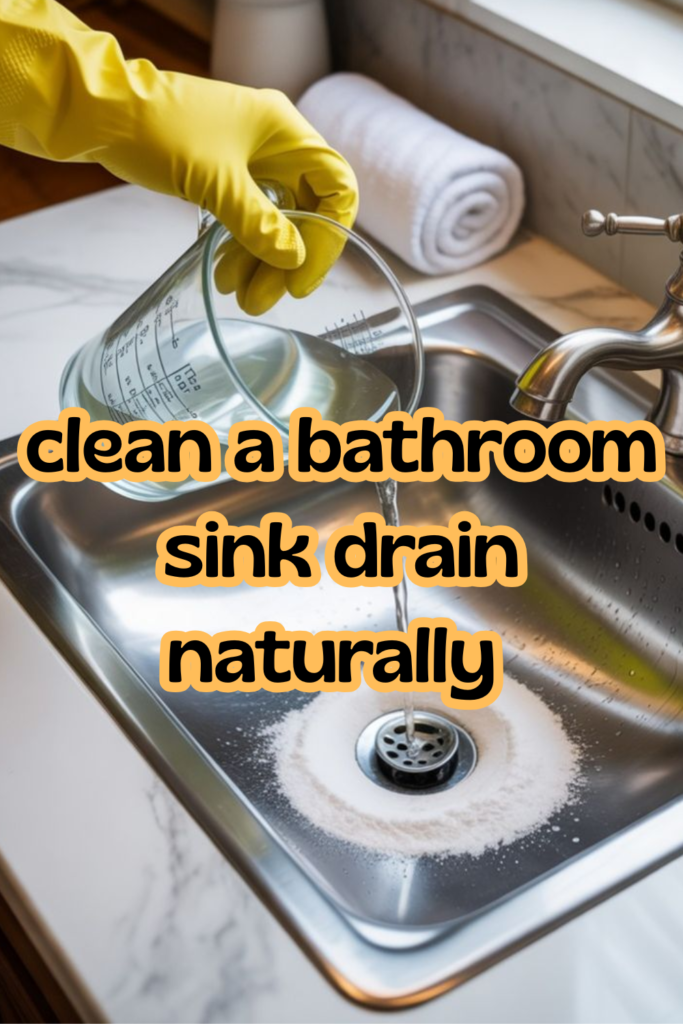
Step 2: Pour baking soda down the drain. Measure about half a cup of baking soda and pour it directly into the drain opening. Try to get as much of it down the pipe as possible rather than letting it sit on the drain cover.
Step 3: Add white vinegar. Follow up immediately with half a cup of white vinegar. The combination will start to fizz and bubble — that’s exactly what you want. The reaction between the acid in the vinegar and the alkaline baking soda creates a gentle but effective scrubbing action inside the pipe.
Step 4: Let it fizz for 15 to 20 minutes. Cover the drain with a stopper or a small cloth to keep the fizzing action directed downward into the pipe rather than escaping back up. Set a timer and let the mixture do its work.
Step 5: Flush with hot water. Boil a kettle or use the hottest tap water available and pour it slowly down the drain. This flushes away the loosened debris, soap scum, and residue. For stubborn buildup, repeat the process a second time.
How to Remove Bad Smell from Bathroom Sink Drain Naturally
If your drain smells but isn’t actually slow or clogged, the issue is almost certainly bacterial. Here are three effective ways to neutralize it:
The baking soda overnight method is the simplest. Pour half a cup of dry baking soda down the drain before bed and leave it overnight without running water. By morning, the baking soda will have absorbed much of the odor. Flush with hot water in the morning.
Lemon and hot water is a fresh-smelling alternative. Squeeze the juice of one lemon into the drain, let it sit for ten minutes, then flush with hot water. Lemon’s natural acidity helps break down bacteria and leaves a clean citrus scent.
Essential oils are optional but pleasant. A few drops of tea tree oil or eucalyptus oil added to your baking soda before pouring it down the drain can provide additional antibacterial action while leaving the drain smelling clean.
How to Prevent Bathroom Sink Drain Clogs
Preventing a clog is far easier than clearing one. These habits take almost no time but make a significant difference:
- Run hot water down the drain for 30 to 60 seconds once a week. This helps flush away fresh soap and toothpaste residue before it hardens.
- Install a simple drain strainer. These inexpensive mesh covers catch hair and debris before they enter the pipe. Empty it every few days.
- Avoid rinsing hair down the drain after shaving or brushing. Wipe it up with a tissue instead.
- Do a baking soda and vinegar treatment once a month as a preventative measure, even if the drain seems fine. It keeps bacterial buildup and odor at bay.
When Natural Methods Aren’t Enough
Natural solutions are excellent for regular maintenance and mild blockages, but sometimes the problem goes deeper.
Signs of a serious blockage include water that pools in the sink and drains extremely slowly even after multiple cleaning attempts, gurgling sounds from the drain, or the same clog recurring within days of clearing it.
In these cases, a drain snake (also called a drain auger) is your next step. You can find one at any hardware store for under $20. It physically breaks up or retrieves clogs that are too deep for baking soda and vinegar to reach.
If the drain snake doesn’t solve the problem, or if you notice multiple drains in your home backing up at the same time, that likely signals a blockage in the main sewer line — and it’s time to call a licensed plumber.
Frequently Asked Questions
How often should I clean my bathroom sink drain? For most households, once a month is sufficient for routine maintenance. If you notice slow drainage or odor developing sooner, increase it to every two weeks.
Can baking soda and vinegar damage pipes? No. The reaction between baking soda and vinegar is mild and safe for all common pipe materials including PVC, copper, and older metal pipes. It’s far gentler than commercial chemical drain cleaners, which can corrode pipes over time.
What is the fastest way to unclog a bathroom sink? The baking soda and vinegar method described above works in under 30 minutes for most minor clogs. For faster results on a more stubborn blockage, use a plunger immediately after the fizzing step before flushing with hot water.
Why does my bathroom sink smell bad? Drain odors are almost always caused by bacteria feeding on trapped organic material — hair, soap scum, and skin cells — inside the pipe. Regular cleaning with baking soda eliminates the food source for those bacteria and keeps the smell from returning. It’s also worth checking whether your sink’s P-trap (the curved pipe beneath the sink) has dried out, as this can allow sewer gases to enter — simply running water for a minute will refill it.
Conclusion
Keeping your bathroom sink drain clean doesn’t require expensive products or professional help. With just baking soda, white vinegar, and hot water, you can clear buildup, eliminate odors, and prevent clogs from forming in the first place. Whether you’re doing a full how to deep clean bathroom overhaul or just tackling a smelly drain, this natural approach is safe, effective, and genuinely easy to stick with.
If you found this guide useful, share it with someone who could use it, and drop a comment below with your own favorite drain-cleaning tip. And if you’ve been wondering how to clean mold off bathroom ceiling while you’re at it — that’s a great next project to tackle right after this one.