
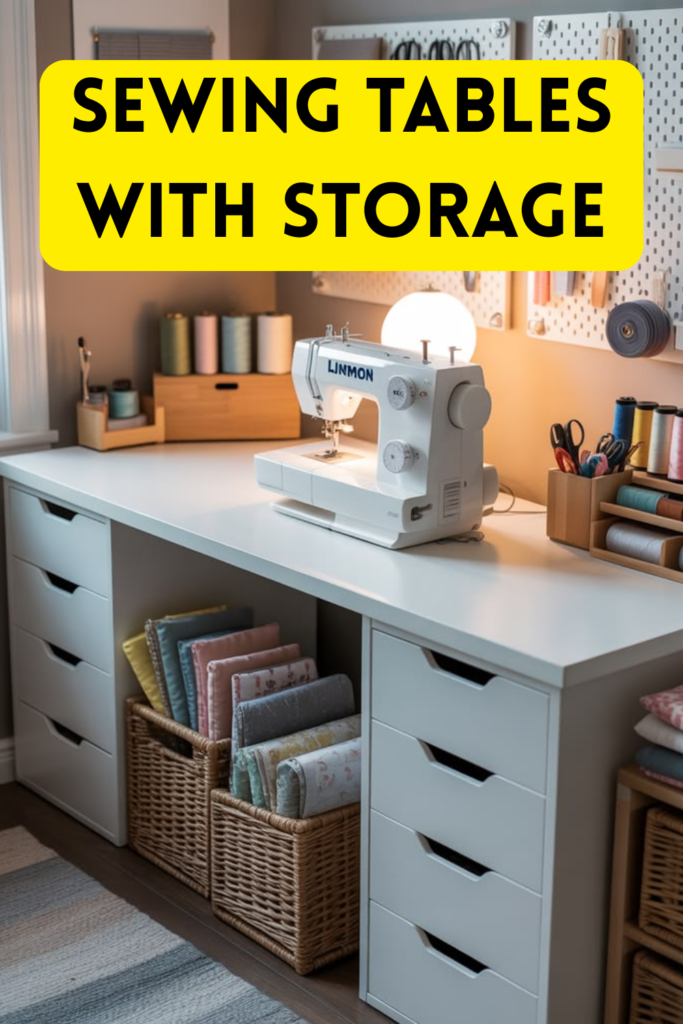
Does your sewing space feel like a fabric explosion? Threads tangled in corners, scissors buried under pattern pieces, and bobbins mysteriously rolling off every surface? You’re not alone — and the solution might be simpler than you think.
The right sewing table with storage doesn’t just give you a place to sew — it gives your entire creative process a foundation. When your workspace is organized, your mind follows. You spend less time searching and more time creating. Whether you’re a weekend hobbyist or a dedicated seamstress running a home studio, investing in sewing tables with storage is one of the most impactful upgrades you can make to your craft room.
In this guide, we’ll walk you through the best options on the market, expert tips for small spaces, a practical buying guide, and pro organization strategies — all so you can build the dream sewing table setup that actually works for your life.
Quick Answer: What Is the Best Sewing Table with Storage?
The best sewing table with storage combines a sturdy, flat work surface with built-in drawers, shelves, or compartments for tools, thread, and fabric. For most sewers, a cabinet-style sewing table with locking casters, pull-out drawers, and a fold-down extension leaf offers the ideal balance of functionality and space efficiency. Top-rated options include the Arrow Sewing Cabinets series and the Sulky Sewing & Serger Cabinet.
Why Choose Sewing Tables with Storage?
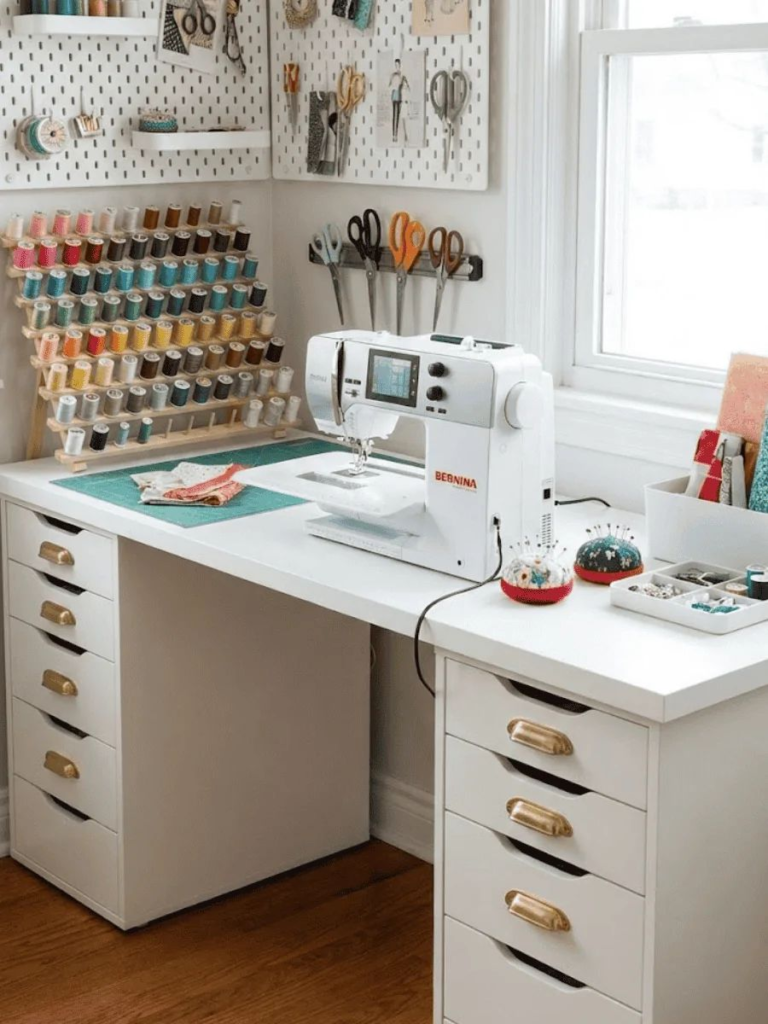
Better Organization Built-in storage keeps everything in its place — no more hunting for your seam ripper mid-project. Designated spots for scissors, measuring tape, bobbins, and thread spools eliminate decision fatigue and save precious creative energy.
Space Efficiency A dedicated sewing table with integrated storage replaces the need for a separate shelf unit, a drawer caddy, and a work table. You get three solutions in one footprint — a game-changer for small craft rooms or apartment sewing nooks.
Improved Productivity Professional seamstresses know this secret: a clean workspace shortens production time. When your tools are accessible and logically arranged, you move faster, make fewer mistakes, and stay in your creative flow longer.
Cleaner Aesthetic Let’s be honest — a beautiful, organized sewing station is inspiring. The right sewing table and storage combo turns a chaotic corner into a Pinterest-worthy studio you’ll actually want to spend time in.
Best Sewing Tables with Storage: Top Picks for Every Budget
1. Compact Folding Sewing Table with Storage
Perfect for apartment dwellers and occasional sewers, compact folding sewing tables feature a slim profile that opens into a full workspace. Many models include two to three small drawers or a lower shelf for storing notions. Look for steel-reinforced legs and a smooth laminate surface that allows fabric to glide freely.
- Key features: Folds flat, built-in drawer, lightweight, easy setup
- Best for: Small spaces, beginners, renters
2. Sewing Cabinet with Drawers
The classic choice for dedicated sewers. Sewing cabinets with drawers typically include a lift mechanism that raises your sewing machine to table height — and lowers it flush when not in use. Deep drawers accommodate fabric stacks, and shallower ones organize thread, needles, and feet attachments.
- Key features: Machine lift platform, multiple drawer tiers, enclosed design
- Best for: Serious hobbyists, home studios, neat freaks
3. Multi-Function Craft Table with Shelves
These versatile tables serve double duty — sewing station by day, project desk by night. Open shelving on the sides or below the surface stores fabric bolts, pattern bins, and supply baskets. A large flat surface accommodates cutting as well as stitching.
- Key features: Open shelving, large tabletop, dual-purpose design
- Best for: Quilters, mixed-media crafters, large project workers
4. Rolling Sewing Table with Storage
Mobility is underrated. A rolling sewing table lets you move your setup to natural light, rearrange your room, or tuck everything away at a moment’s notice. Choose a model with locking casters and a shelf below the main surface for bins or a fabric caddy.
- Key features: Caster wheels with locks, lower shelf, adjustable height options
- Best for: Multi-use rooms, renters, those who sew in different spots
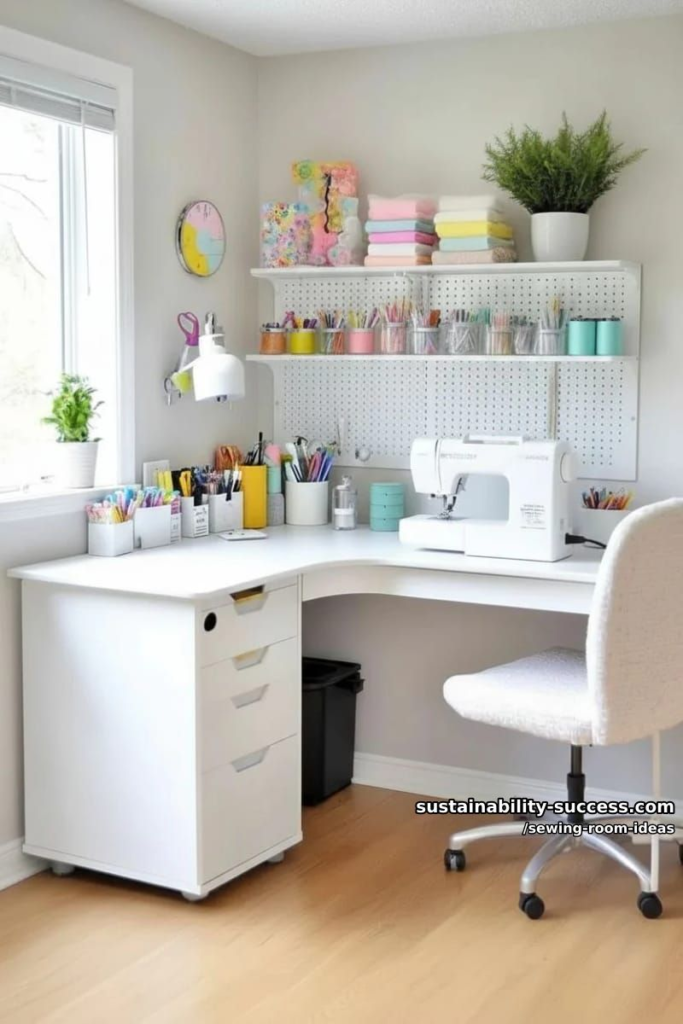
5. Corner Sewing Desk with Storage
L-shaped corner desks maximize the most underutilized real estate in any room. One arm holds the sewing machine while the other provides cutting space. Corner units often come with wall-mounted hutch options for vertical storage — doubling your capacity without adding floor footprint.
- Key features: L-shape layout, often includes hutch or overhead shelving
- Best for: Dedicated sewing rooms, corner optimization
6. Wall-Mounted Fold-Down Sewing Table
A fold-down wall table is essentially invisible when not in use — it folds flat against the wall like a picture frame. Behind the panel, you’ll often find cubbies, hooks, and pockets for storing thread, scissors, and small tools. Genius for tiny spaces.
- Key features: Folds completely flat, integrated storage behind panel, zero floor footprint
- Best for: Studio apartments, closet sewing rooms, minimalists
- 7. DIY Sewing Table with Custom Storage
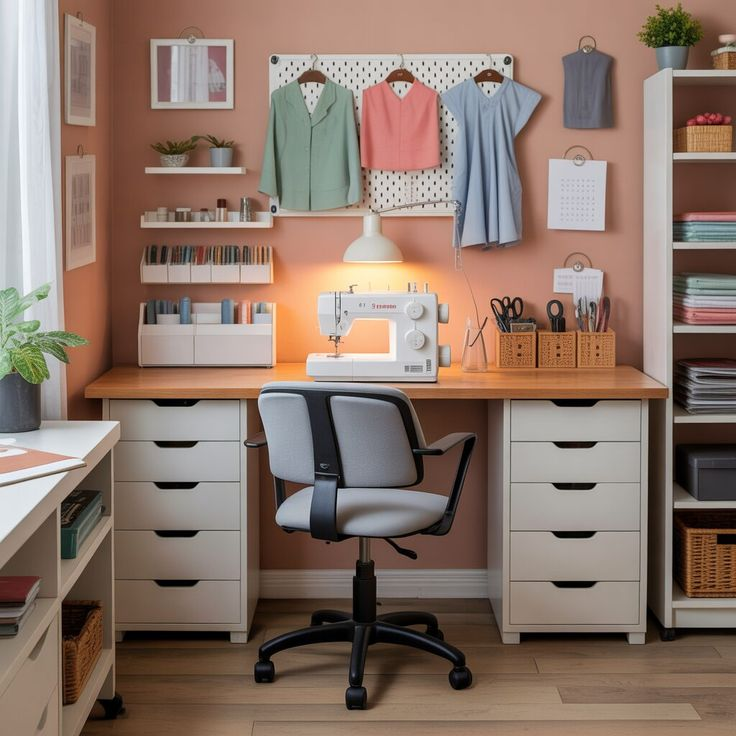
Sometimes the best sewing table is the one you build yourself. A DIY approach using IKEA ALEX drawers, a solid door slab top, and pegboard panels can yield a fully customized sewing table and storage system tailored to your exact machine dimensions and tool collection. Budget-friendly and endlessly personalized.
- Key features: Fully customizable, cost-effective, can integrate pegboard and lighting
- Best for: Makers, budget-conscious crafters, unique room layouts
How to Choose the Best Sewing Table with Storage
Buying a sewing table is a meaningful investment — here’s what to evaluate before you commit:
Size & Surface Space Measure your room first. A table that’s too large creates clutter; one that’s too small creates frustration. For most household sewing machines, a minimum surface of 24″ x 48″ is recommended. Quilters and pattern cutters should aim for 30″ x 60″ or more.
Storage Type Consider what you actually need to store:
- Drawers are ideal for small notions (bobbins, needles, pins)
- Shelves work well for fabric bolts and pattern storage
- Hidden compartments keep tools protected and the surface clean
- Pegboards are perfect for scissors, rulers, and thread spools
Mobility Do you need to move the table frequently? Choose casters with individual locks. Do you want it stationary? Opt for leveling feet on a solid-frame cabinet.
Material & Durability Laminate surfaces are easy to clean and resist pin scratches. Solid wood offers longevity but adds weight. MDF construction is budget-friendly but less moisture-resistant — something to consider in humid climates.
Sewing Tables with Storage for Small Spaces
No dedicated craft room? No problem. Here are three approaches that work in tight quarters:
Foldable Tables A folding sewing table can live in a closet between sessions. Look for ones with built-in storage panels that stay organized even when folded — so setup is a matter of seconds, not minutes.
Wall-Mounted Options The fold-down wall desk (mentioned above) is the ultimate space-saver. Install it in a hallway, bedroom corner, or even a large closet. When closed, it’s décor. When open, it’s a full workspace.
Corner Desks Even small rooms typically have corners doing nothing. An L-shaped corner sewing desk nestled into a spare corner creates a surprising amount of working and storage space without dominating the room.
How to Keep Your Sewing Table Clutter-Free
Even the best sewing tables with storage need a system behind them. Here’s how professionals keep their surfaces clean:
Use Bins and Dividers Drawer dividers prevent small items from mixing together. Use stackable clear bins on shelves so you can see contents at a glance — no rummaging required.
Label Everything Label your bins, drawers, and baskets. It sounds basic, but labeled storage is the difference between a system that holds and one that collapses after two weeks. Use a label maker or simply pretty washi tape with a marker.
Keep Daily Tools Accessible Apply the “frequency rule”: the tools you use every single session should live on the surface or in the top drawer. Everything else goes deeper. This keeps your main workspace clear while your essentials stay within reach.
Do a 5-Minute Reset Before you close up for the day, spend five minutes returning every item to its home. This daily habit prevents accumulation — and means you’ll always sit down to an inviting, ready-to-use station.
FAQ: Sewing Table with Storage Questions Answered
What size sewing table do I need? For most home sewing machines and basic garment sewing, a surface of 24″–30″ deep and 48″–60″ wide is sufficient. Add width if you regularly cut large fabric pieces or work with quilts.
Are sewing cabinets worth it? Absolutely — if you sew regularly. A proper sewing cabinet protects your machine, reduces setup and teardown time, and dramatically improves organization. Think of it as a long-term investment in your craft, not just a piece of furniture.
How do I organize a small sewing space? Focus on vertical storage: wall-mounted pegboards, stackable bins, and tall shelving units take advantage of wall height rather than floor space. Use a fold-down or compact folding table to minimize the footprint, and apply the “one in, one out” rule for fabric purchases to prevent stash overwhelm.
Explore More Craft Room Inspiration
Looking to go further? Check out our related guides:
- Craft Room Ideas — full room layouts from beginner to pro
- Storage Hacks for Small Spaces — clever solutions beyond the sewing room
- DIY Furniture for Makers — build your own dream setup on a budget
Conclusion: Your Dream Sewing Space Starts Here
A well-chosen sewing table with storage is more than furniture — it’s a commitment to your craft. It says this matters, I matter, and the time I spend creating deserves a space that supports it fully.
Whether you opt for a rolling cabinet, a DIY IKEA hack, or a wall-mounted fold-down gem, the right table will reduce clutter, increase creativity, and make every sewing session more enjoyable from the first stitch to the last.